Types of Quilt Shops
Quilt shops come in various types, each catering to different aspects of the quilting and sewing community. While this is not an exhaustive list, these are some of the most common types.
1. Specialty Quilt Shops
These stores primarily focus on quilting fabrics, patterns, and supplies. They offer a wide selection of high-quality quilting fabrics, batting, quilting tools, and patterns — and often feature unique or hard-to-find items. Specialty quilt shops frequently host quilting classes, workshops, and quilting bees to foster a strong community among quilters.

2. General Fabric Stores
General fabric stores offer a broad range of fabrics for various purposes including quilting, apparel, home decor, and crafting. They carry an extensive inventory of fabrics such as cotton, silk, wool, and synthetic blends, along with sewing notions, patterns, and tools. General fabric stores appeal to a wider audience including quilters, garment makers, and crafters.
3. Boutique Quilt Shops
Boutique stores offer a curated selection of premium and designer fabrics. These stores emphasize quality over quantity and often carry exclusive or limited-edition fabrics, along with high-end quilting supplies. They provide a personalized shopping experience and may offer services such as custom fabric orders, design consultations, and bespoke quilting services.
4. Discount Fabric Stores
These stores sell fabrics and quilting supplies at a lower price point, often including overstock, discontinued, or remnant fabrics. They offer budget-friendly options for quilters and sewers looking for affordable materials. Discount fabric stores are popular among cost-conscious customers and those seeking good deals on quality fabrics.
5. Online Quilt and Fabric Stores
These retailers operate primarily online, offering fabrics and quilting supplies through their websites. Customers can browse and purchase fabrics, patterns, and tools online, with the option of pickup or convenient home delivery. Online stores often provide a larger selection and cater to a broader customer base, making it easier to find specific or rare items.
6. Brick-and-Mortar and Online Stores
Traditional retail quilt shops operate both a physical retail location and an online store. Customers can shop in-person or online, offering the convenience of both shopping experiences. Hybrid stores can reach a wider audience and provide flexibility for customers who prefer different shopping methods.
7. Cooperative Quilt Shops
Owned and operated by a group of quilting enthusiasts or a quilting guild — these shops function as a cooperative, where members share responsibilities and profits. They often focus on community engagement and may host quilting classes, events, and social gatherings. Cooperative quilt shops foster a strong sense of community and collaboration among quilters.
8. Sewing Machine Dealers With Fabric Departments
These stores primarily sell sewing machines and related equipment, but also have a fabric section. In addition to sewing machines, they offer fabrics, threads, patterns, and sewing notions. They often provide sewing machine demonstrations, repairs, and maintenance services, along with sewing and quilting classes.
Each type of store serves a unique market niche, catering to the diverse needs and preferences of quilters and sewers. Whether you’d prefer to run a quilting specializing in unique experiences, offer a broad selection of crafting supplies, or provide the convenience of online shopping, there is a store type to meet your needs.
Related Read: ANSWERED: How Much Does It Cost To Open a Fabric Store?
Business Structure of Your Quilt Shop
When opening a fabric or quilt store, choosing the right business structure is crucial to liability, taxes, and management flexibility. Here are the common types of business structures you might consider.
1. Sole Proprietorship
A sole proprietorship is a business owned and operated by a single individual. It’s simple to establish with minimal legal requirements and gives the individual full control over business decisions.
Your income is reported on your personal tax return, simplifying taxation. However, personal assets are at risk if the business goes into debt or has legal issues. You may have difficulty raising capital depending on your personal credit rating.

2. Partnership
A business owned by two or more individuals who share profits and responsibilities would need to be created as a partnership. There are a couple of types of partnerships:
- General partnership: All partners share management duties and liabilities.
- Limited partnership: Includes both general partners (with management control and liability) and limited partners (with limited liability and no management control).
An advantage of a partnership is that the responsibility is shared. Partners can divide the workload and bring diverse skills to the business.
Partnerships are relatively simple to establish with a partnership agreement. The profits from the business are passed through to partners' personal tax returns. Some of the disadvantages are that general partners' personal assets are at risk and disagreements between partners can affect the business.
3. Limited Liability Company
A limited liability company (LLC) is a hybrid structure that combines the benefits of a corporation and a partnership/sole proprietorship. LLC owners (members) are protected from personal liability for business debts and can choose to be taxed as a sole proprietorship, partnership, or corporation to be managed by members or appointed managers.
An LLC has more paperwork and legal requirements than sole proprietorships or partnerships and requires adherence to state-specific regulations and annual filings.
4. Corporation
A corporation is a legal entity separate from its owners (shareholders), providing strong protection from personal liability. There are two types of corporations:
- C corporation: Standard corporation that is subject to corporate income tax.
- S corporation: Allows profits to be passed through to shareholders' personal tax returns, avoiding double taxation.
Shareholders are protected from personal liability for business debts and have the ability to raise capital through the sale of stock. A corporation continues to exist as its ownership changes when stock in the company is bought and sold.
Creating a corporation is complex. It requires more paperwork, including articles of incorporation, bylaws, and regular board meetings. Its profits are taxed at the corporate level, and again when distributed as dividends.
5. Cooperative
A cooperative is a business owned and operated by a group of individuals for their mutual benefit, emphasizing member control, community focus, and limited liability. Each member participates in decision-making and shares in the profits, fostering a democratic and collaborative environment. This structure provides a balanced approach to business, combining shared values with protection against personal liability.
While cooperatives often align with community and social goals, they may face challenges such as limited capital due to reliance on member contributions, and potential delays in decision-making as consensus is required.
6. Nonprofit Organization
Nonprofit organizations operate for charitable, educational, or social purposes rather than for profit. They may qualify for federal and state tax exemptions and can receive donations and grants. Board members and officers have limited liability from personal liability.
Nonprofit organizations must adhere to specific legal and reporting requirements and profits must be reinvested in the organization's mission rather than distributed to owners.
Choosing the Right Structure
Consider your long-term business goals when deciding on your business structure, including growth potential, financial needs, and management preferences.
You need to assess your willingness to assume personal liability for business debts and legal issues. Understand the tax implications of each structure and how they align with your financial situation. Seek advice from legal and financial professionals to help determine the best structure for your specific circumstances.
Selecting the appropriate business structure is a foundational step in opening your fabric and quilt store, and it will influence many aspects of your business operations and legal responsibilities.

Financing Your Quilt Shop
Financing your new quilt shop involves several potential avenues. Here are some strategies to consider.
1. Personal Savings
Financing your new quilt shop involves several potential avenues to explore. One of the most straightforward methods is using your personal savings. This option has the advantage of not incurring debt or interest, giving you complete control over your business. However, it comes with the risk of losing your personal savings, which can be a significant source of stress and may limit the amount of initial capital you have available.
- Advantages: No debt or interest to pay off, and you maintain full control over your business.
- Disadvantages: Risking your personal savings can be stressful, and it may limit your initial capital.
2. Family and Friends
Another common approach is borrowing funds from family and friends. This can be beneficial as it typically involves lower or no interest rates and offers more flexible repayment terms. However, consider the potential risk to personal relationships if your business encounters difficulties. Mixing business with personal connections should be approached with caution.
- Advantages: Potentially lower or no interest rates, and more flexible repayment terms.
- Disadvantages: Mixing business with personal relationships can be risky if the business faces challenges.
3. Small Business Loans and Grants
Small business loans and grants are also viable options. Various types of loans, such as those offered by the Small Business Administration (SBA) and microloans from nonprofit organizations, are designed to support small businesses.
Grants, which can come from federal, state, or private sources, do not require repayment and can provide a financial boost without adding to your debt. However, the application process can be time-consuming — and there may be a lot of competition for the same grant.

Types of Loans
- SBA loans: The Small Business Administration offers various loan programs designed to support small businesses.
- Microloans: Smaller loans provided by nonprofit organizations are suitable for businesses needing less capital.
Types of Grants
- Federal and state grants: Look for government grants that support small businesses or specific industries.
- Private grants: Some corporations and philanthropic organizations offer grants to small businesses.
- Advantages: Provides substantial financing with low-interest, no-interest, or no-repayment plans.
- Disadvantages: Applying for a loan or grant can be time-consuming and require extensive documentation.
4. Investors
Seeking investors is another path to consider. Angel investors and venture capitalists can provide significant capital and business expertise in exchange for ownership equity or convertible debt. While this can offer substantial funding, it often requires giving up some control of your business.
- Advantages: Access to significant capital and business expertise.
- Disadvantages: You may have to give up some control over your business.
5. Crowdfunding
Crowdfunding platforms like Kickstarter, Indiegogo, and GoFundMe allow you to raise funds from a large group of people. This method can help you secure funds without incurring debt or giving up equity but it requires a robust marketing effort to attract backers.
- Advantages: Can raise funds without giving up equity or incurring debt.
- Disadvantages: Requires a strong marketing campaign to attract backers.
6. Business Credit Cards
Business credit cards can offer easy access to funds and help build business credit. However, they come with high interest rates if balances are not paid off each month, which can quickly add up. Vendor financing is another option where suppliers may allow you to pay over time, helping manage cash flow and build supplier relationships. This option may come with higher costs or interest rates.
- Advantages: Easy access to funds and can help build business credit.
- Disadvantages: High interest rates if the balance is not paid off each month.
7. Vendor Financing
Vendor financing is an arrangement where suppliers offer payment terms that allow you to purchase their products or inventory with deferred payment options, typically over a set period. This method can be particularly advantageous for new quilt shop owners as it helps manage cash flow by spreading out payments, allowing you to stock your store without an immediate financial burden.
Vendor financing can also foster stronger relationships with suppliers, potentially leading to better terms and services in the future. However, it’s essential to be aware that vendor financing may come with higher costs or interest rates compared to traditional loans, and it might require you to commit to purchasing from a specific supplier, which could limit your flexibility in sourcing products.
- Advantages: Can help manage cash flow and build relationships with suppliers.
- Disadvantages: Financing may come with higher costs or interest rates.
8. Community Development Financial Institutions
Community Development Financial Institutions (CDFIs) offer affordable lending to small businesses in underbanked communities, often with more flexible terms than traditional banks. However, these opportunities might be limited and typically require a strong business plan.
- Advantages: CDFIs typically offer more flexible lending terms than traditional banks.
- Disadvantages: Limited availability and may require a strong business plan.
9. Online Lenders
Online lenders such as LendingTree, Fundbox, and OnDeck provide quick access to capital with a fast approval process and flexible terms, though they usually come with higher interest rates compared to traditional banks.
- Advantages: Online lenders have a fast approval process and flexible terms.
- Disadvantages: Higher interest rates compared to traditional banks.

10. Local Economic Development Programs
Lastly, investigate local economic development programs. Many cities and counties support local small businesses through loans, grants, or tax incentives. These programs typically offer favorable terms and additional support services, though they may have specific eligibility requirements.
Advantages: Often come with favorable terms and support services.
Disadvantages: May have specific eligibility requirements.
Choosing the right financing option for your quilt shop depends on your business needs, financial situation, and long-term goals. Carefully evaluate each option, considering their potential risks and benefits.
For more detailed guidance tailored to your specific situation, you may want to consult with a financial advisor or a business mentor experienced in the retail industry.
Finding a Location for Your Quilt Shop
Finding and securing a location for your new quilt shop is a critical step that can significantly impact your business' success. Let’s look at a comprehensive approach to help you through this process.
1. Define Your Requirements
This involves identifying your target market by understanding who your customers are and where they’re located, considering demographics such as age, income, and quilting or crafting interests. Determine the amount of space needed for retail, storage, and potentially a workshop or class area, keeping future growth in mind. Establish a budget for rent, utilities, and other occupancy costs, while also accounting for initial setup expenses like renovations, fixtures, and signage.
2. Research Potential Locations
Next, research potential business locations. Look for high-traffic areas such as shopping centers, malls, or busy streets, and consider proximity to complementary businesses like craft stores or coffee shops to drive traffic to your store. Utilize commercial real estate websites like LoopNet, Zillow, and CoStar to search for available retail spaces in your desired area.
Additionally, engage with local commercial real estate agents who have knowledge of the market and can provide insights into available properties and lease negotiations.
3. Evaluate and Visit Locations
Once you’ve identified potential locations, evaluate and visit them. Observe the foot traffic at different times of the day and week to gauge potential customer flow. Ensure the location is easily visible and accessible from major roads, with ample parking or public transportation options nearby.
Assess the competition in the area; being close to competitors can sometimes be beneficial, but too much competition might be detrimental. Check local zoning laws and regulations to ensure your business type is permitted in the area.

4. Negotiate the Lease
When you find a suitable location, negotiate the lease terms carefully. Review the lease agreement in detail including rent, lease length, renewal options, and any additional costs like maintenance or property taxes. Negotiate for favorable terms such as rent-free periods, tenant improvement allowances, or flexible lease lengths to reduce initial costs.
It’s advisable to have a lawyer review the lease agreement to ensure your interests are protected and all terms are clear.
5. Plan the Store Layout and Design
After securing a location, plan the store layout and design. Create a layout that maximizes the use of space, provides a pleasant shopping experience, and allows for easy navigation. Consider areas for displays, cutting tables, and checkout counters. Design a customer-friendly layout that maximizes space utilization and enhances the shopping experience.
Choose decor, lighting, and displays that reflect your brand and attract customers. Choose a design and decor that reflect your brand and appeal to your target customers, incorporating good lighting, comfortable seating, and attractive displays to enhance the shopping experience. Ensure your store layout complies with local building codes, accessibility standards, and safety regulations.
6. Set Up and Open Your Quilt Shop
Finally, set up and open your store. Complete any necessary renovations, install fixtures and fittings, and arrange your inventory and displays. Promote your grand opening through social media, local advertising, and community events to attract customers to your new location. Consider a soft opening to test your operations and make any necessary adjustments before the official grand opening.
Finding and securing the right location for your quilt shop involves careful planning, research, and negotiation. Research and visit potential locations based on foot traffic, visibility, accessibility, and competition. Negotiate lease terms carefully to secure favorable conditions. By following these steps, you can choose a location that meets your needs and sets your business up for success.
Helpful Tools To Run a Quilt Shop
Successfully opening a new quilt shop involves utilizing a variety of tools, processes, and systems to streamline operations, attract customers, and manage everything efficiently. Here are key components to consider.
Point of Sale System
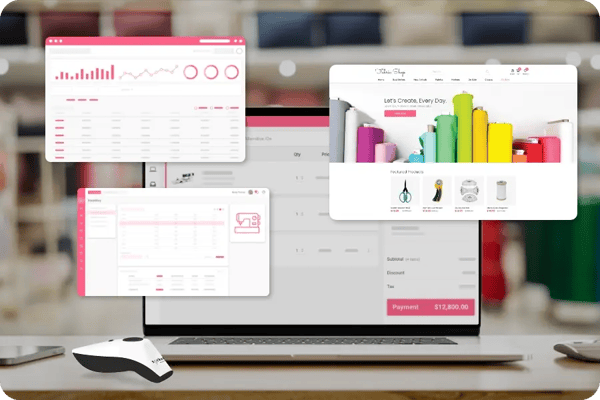
Modern point of sale (POS) systems handle sales transactions, track online and in-store inventory, manage customer data and loyalty programs, and generate business reports.
There are generic retail providers such as Square, Shopify, Lightspeed, and Clover — but if you’re looking for a solution with features that are designed for quilt shops, Like Sew is the best industry-specific option on the market.
Inventory Management Software
Your inventory management software helps you track stock levels, manage vendors, and automate reordering processes to avoid stockouts or overstocking.
We recommend using an inventory management feature that’s baked into your point of sale software for accurate stock tracking and reports.
Automate inventory tracking using software to keep track of stock levels, manage orders, and forecast demand. Plan to review your system regularly to monitor your inventory.
Accounting Software
Accounting software manages finances, tracks expenses, generates invoices, and prepares financial reports. Some widely used software include QuickBooks, Xero, and FreshBooks. Most point of sale software supports accounting and payroll integrations.
Sales and Reporting System
Integrate your POS system with inventory and accounting software to streamline sales tracking and financial reporting. Regularly review sales reports, inventory levels, and financial statements to make informed business decisions.
Customer Relationship Management System
Customer relationship management (CRM) systems track customer interactions, manage customer data, and support marketing efforts. Popular choices are HubSpot CRM, Salesforce, and Zoho CRM.
Implement a CRM system to manage customer interactions, track purchase history, and personalize marketing efforts. Collect and analyze customer feedback to improve products and services.
E-Commerce Platform
An e-commerce platform enables you to sell products online, manage online orders for pickup and delivery, and integrate with your physical store’s inventory. Top platforms include Shopify, WooCommerce, and BigCommerce.
Many modern POS solutions have third-party integrations available, while some even have their own e-commerce platform.
Set up an e-commerce website to expand your reach and offer customers the convenience of online shopping. Ensure your online store inventory is synchronized with your physical store to prevent discrepancies.

Marketing and Promotion System
Develop a comprehensive marketing plan that includes both online and offline strategies for promoting your quilt shop.
Engage with potential customers on social media platforms like Facebook, Instagram, TikTok, and Pinterest, and host events and workshops to attract and engage customers. Think of creative ways to market to your customers in-store and through your loyalty program.
If you have a marketing game plan, you'll be well-prepared to navigate the competition and stand out in the market.
By leveraging these tools, processes, and systems, you can streamline operations, attract and retain customers, and set your quilt shop up for success. Each component plays a critical role in ensuring your business runs smoothly and efficiently, allowing you to focus on delivering exceptional products and services to your customers.
Operational Business Processes
Efficient daily operations are the backbone of a successful quilt shop. From clear store policies to well-defined employee perks, every detail plays a crucial role in creating a productive and satisfying work environment. In this section, we’ll explore the essential operational processes you need to consider for your new quilt shop.
Hiring and Training Staff
Before opening your doors, begin recruiting employees with a passion for quilting and excellent customer service skills. Provide thorough training on product knowledge, customer service, using the POS system, and store policies.
Recruiting
Implement effective recruiting strategies to attract top talent. Use a mix of online job postings, local community boards, and referrals to find candidates who are passionate about quilting and customer service.
Pay Scale
Define a competitive pay scale to attract and retain talented employees. Consider industry standards and local living costs to determine fair compensation for each position.
Positions and Titles
Create a detailed list of positions and titles to clarify roles and responsibilities. Typical positions may include store manager, sales associate, and class instructor, each with specific duties to support the store’s operations.
Employee Perks
Offer enticing employee perks to enhance job satisfaction. Perks such as employee discounts on fabrics and supplies can boost morale and encourage staff to engage with your products.
Benefits
Provide comprehensive benefits to support your employees’ well-being. Health insurance, retirement plans, and paid leave are essential benefits that can help attract and retain a dedicated team.
Days Off
Establish a fair and transparent policy for days off. Clearly outline the process for requesting time off and ensure staff members have adequate opportunities to rest and recharge.
Store Policies
Establishing clear store policies is vital for smooth operations. Outline guidelines for customer service, returns, and exchanges to ensure consistency and transparency in every transaction.
Employee Handbook
Compile an employee handbook that covers all essential policies and procedures. This should be a go-to resource for staff members to reference store rules, job expectations, and benefits information.
Onboarding
Develop a comprehensive onboarding process to help new employees integrate smoothly. This should include an introduction to store policies, job-specific training, and a guided tour of the store.
By carefully planning and implementing these operational processes, you create a structured and supportive environment that benefits both your employees and customers.
Are You Ready To Open a Quilt Shop?
Opening a quilt shop requires careful planning, strategic decision-making, and the right tools and systems to ensure success.

From understanding the various types of quilt stores and selecting a suitable business structure to securing financing and finding the perfect location, each step is crucial in shaping your business' future. Implementing effective processes and utilizing modern tools like a POS system, inventory management software, and a CRM platform will streamline your operations and enhance customer satisfaction.
By following the guidance provided in this comprehensive guide, you’ll be well-prepared to create a quilt shop that not only meets but exceeds the expectations of your customers, fostering a loyal community of quilters and sewers.
Opening a quilt shop comes with many exciting opportunities and important decisions. One of the key elements to consider is choosing the right tools to streamline your operations and enhance the customer experience. When the time is right, consider Like Sew’s POS and e-commerce software to make running your business much easier.
Here's a quick recap of some of Like Sew's top features to streamline your operations:
- Integrated POS system: Manage sales, track inventory, and handle customer data in real time.
- Inventory management: Automate inventory tracking to maintain optimal stock levels.
- Customer loyalty programs: Reward repeat customers to foster loyalty and increase sales.
- E-commerce integration: Sync your online store with in-store inventory for seamless operations.
- Class management tools: Organize and promote sewing and quilting classes effortlessly.
- Vendor management: Keep an updated catalog of vendors to streamline ordering and inventory updates.
- Financial reporting: Generate detailed financial reports to monitor performance and make informed decisions.
- Employee management: Implement systems for clocking in/out, defining security roles, and managing schedules.
Like Sew POS software is designed specifically for quilt shops, providing powerful features that cater to your unique needs.
We invite you to explore how Like Sew POS software can benefit your store. Schedule a demo with us today to see firsthand how our software can help you achieve efficiency and success in your new venture.


©2026 Like Sew. All rights reserved.